Industry News
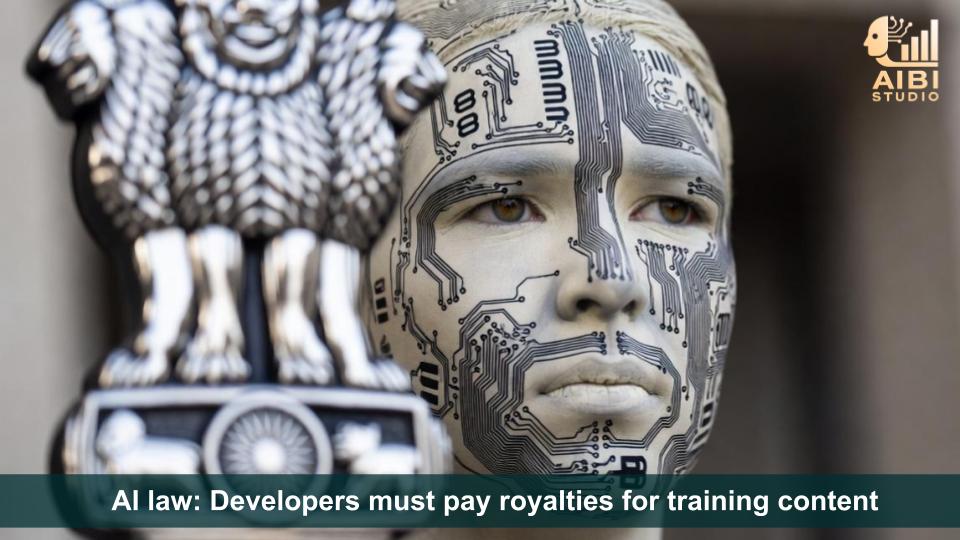
India proposes landmark AI law: Developers must pay royalties for training content
Dec
In a bold move that could reshape the global AI landscape, India’s Department for Promotion of Industry and Internal Trade (DPIIT) has released a landmark working paper proposing a mandatory royalty system for generative AI developers using copyrighted material in model training. Released on December 8, 2025, this “Part 1” paper titled “One Nation, One Licence, One Payment: Balancing AI Innovation and Copyright” rejects free, unrestricted access to protected works and instead introduces a hybrid statutory licensing model.
This proposal positions India as a potential pioneer in protecting creators while fostering responsible AI growth. Here’s everything you need to know about this groundbreaking framework.
Why India Is Rejecting “Zero-Price” AI Training
The DPIIT committee, formed in April 2025, argues that allowing AI companies to train models on copyrighted content without compensation would harm the creative ecosystem. It could lead to an imbalance, reducing incentives for human creators and resulting in long-term underproduction of high-quality content.
The paper explicitly states: “No Absolutes.” It dismisses blanket exceptions similar to the EU’s Text and Data Mining (TDM) opt-out system, citing impracticality, enforcement challenges, and the risk of exposing trade secrets through mandatory disclosures.
Instead, the committee calls for a balanced approach that provides legal certainty for AI startups while ensuring fair revenue for artists, writers, musicians, and other rightsholders.
The Proposed Hybrid Statutory Licensing Model
The core recommendation is a “pay-for-use” hybrid model designed to simplify access for AI developers and guarantee compensation for creators. Key features include:
- Mandatory Blanket Licence AI companies automatically get non-negotiable access to all lawfully accessed copyrighted works for training purposes. No individual negotiations required, eliminating high transaction costs.
- Royalties Triggered on Commercialization Payments only kick in when the AI model is launched commercially (not during research or development). Rates would be set by a government-appointed committee and open to judicial review.
- Equal Compensation for All Creators Every rightsholder receives fair royalties, even if they’re not part of a Collective Management Organization (CMO).
- Centralized Collection System A new body (potentially called the Copyright Royalties Collective for AI Training or CRCAT) would handle royalty collection and distribution at scale.
This “one nation, one licence, one payment” approach aims to reduce administrative burdens while creating a sustainable revenue stream for India’s creative industries.
Stakeholder Reactions and the Road Ahead
The proposal has sparked debate. The Ministry of Electronics & IT (MeitY) has expressed support, viewing it as a way to advance India’s AI ambitions under the IndiaAI Mission. However, industry body Nasscom has dissented, favoring a full TDM exception with opt-out mechanisms and warning that mandatory royalties could act as a “tax on innovation.”
The working paper is now open for public consultation. Stakeholders have 30 days (until early January 2026) to submit feedback, which will help shape the final policy. A second paper on the copyrightability of AI-generated content is expected in the coming months.
What This Means for AI Developers, Creators, and India
If adopted, India would become one of the first countries to mandate royalties for AI training on copyrighted material, potentially influencing global standards.
- For Creators , A reliable income stream from AI use of their work, especially benefiting smaller artists who struggle with individual licensing.
- For AI Companies , Predictable access to vast datasets without endless negotiations, supporting startups and large players alike.
- For India , A framework that protects cultural heritage while accelerating AI innovation.
This proposal strikes a thoughtful middle ground in the ongoing global debate over AI and copyright. As the world watches India’s next steps, it could set a precedent for how societies balance technological progress with creative rights.
